
 English
 Français
 Español
 عربى
عربى

Content
- 1 Quality Control in Color Coated Steel Coil Production
- 2 Core Quality Parameters
- 3 Coating Thickness Measurement Methods
- 4 Standard Measurement Procedure
- 5 Quality Control Matrix: Key Performance Indicators
- 6 In-Process Quality Control
- 7 Common Surface Defects and Prevention
- 8 Storage and Handling Requirements
- 9 Conclusion
- 10 Frequently Asked Questions
Quality Control in Color Coated Steel Coil Production
The quality of a color coated steel coil is determined by a complex interplay of substrate quality, metallic coating integrity, organic coating application, and surface finish. For manufacturers, quality control systems must monitor each stage of production to ensure final products meet performance specifications for corrosion resistance, formability, and appearance.
Quality control for color coated steel coils encompasses raw material inspection, in-process monitoring, and final product testing. Key parameters include coating thickness, adhesion, hardness, color consistency, and surface defect detection. The quality of the final product depends primarily on the production process, but improper handling and storage can also cause significant damage.
Core Quality Parameters
The performance of color coated steel coils is determined by several interdependent parameters that must be controlled throughout production.
Coating Thickness
For exterior applications, the front coating thickness should be at least 20μm (primer ≥5μm, topcoat ≥15μm). Insufficient thickness compromises corrosion protection, while excessive thickness leads to cracking and poor adhesion.
Adhesion & Formability
Pencil hardness should meet 2H standard, with 180° bend performance of ≤3T. These parameters ensure the coating remains intact during roll-forming and profiling operations without cracking or delamination.
Corrosion Resistance
Salt fog resistance of ≥500 hours is required for exterior applications. This testing simulates long-term exposure to corrosive environments and validates the protective performance of the coating system.
Coating Thickness Measurement Methods
Accurate measurement of coating thickness is essential for quality control. The following table summarizes the main measurement methods and their applications.
| Method | Principle | Application | Destructive |
|---|---|---|---|
| Magnetic Thickness Gauge | Electromagnetic induction | Magnetic substrates (steel) | Non-destructive |
| Magnetic-Eddy Current Gauge | Combined magnetic & eddy current | Both magnetic and non-magnetic substrates | Non-destructive |
| Micrometer Method | Thickness difference before/after removal | All substrate types | Destructive |
| Metallurgical Microscopy | Cross-section measurement | Arbitration testing | Destructive |
Standard Measurement Procedure
For galvanized color coated coils, distinguishing between the zinc layer and the organic coating is essential, as standard magnetic thickness gauges measure the total non-magnetic layer thickness.
- Step 1 Measure total thickness of "zinc layer + coating" using a magnetic thickness gauge at five locations more than 25mm from the edge of the sample.
- Step 2 Remove the organic coating using a remover that does not attack the zinc layer. Measure again at the same locations to obtain the zinc layer thickness.
- Step 3 Subtract the zinc layer thickness from the total thickness to obtain the organic coating thickness.
- Standard Follow GB/T 13448-2019 "Test Methods for Color-Coated Steel Sheets and Strips" or ISO 2178 for international compliance.
Quality Control Matrix: Key Performance Indicators
The following comparison provides a structured overview of the critical quality parameters for color coated steel coils.
| Parameter | Acceptance Standard | Measurement Method | Impact on Performance |
|---|---|---|---|
| Coating Thickness (Front) | ≥20μm | Magnetic gauge / Micrometer | Corrosion protection, durability |
| Pencil Hardness | ≥2H | Pencil hardness test | Scratch resistance, wear |
| 180° Bend | ≤3T | T-bend test | Formability, cracking resistance |
| Impact Resistance | ≥9J | Impact test | Handling durability |
| Salt Fog Resistance | ≥500h | Salt spray chamber | Long-term corrosion protection |
| Color Difference | <3ΔE | Spectrophotometer | Aesthetic consistency |
| 60° Gloss | >60 | Gloss meter | Visual appearance |
In-Process Quality Control
During manufacturing, strict in-process quality control measures detect and correct potential issues promptly . Key control points include:
- Coating Application Coating thickness is monitored continuously using non-destructive testing methods. Both coating speed and temperature are controlled, as improper temperature can result in a coating with poor physical properties.
- Surface Inspection Visual inspections detect surface defects such as scratches, dents, or pinholes. Automated inspection systems using cameras and sensors scan the surface at high speed to detect even the smallest irregularities.
- Adhesion Testing Cross-cut and impact tests verify the bond strength between the coating and the substrate, ensuring the coating remains intact during forming operations.
Common Surface Defects and Prevention
Surface defects can affect both the appearance and performance of color coated steel coils. Awareness of common defects enables proactive prevention.
- Scratches Caused by improper handling or contact with sharp objects during processing. Prevent through careful handling and using protective materials.
- Pinholes Tiny holes in the coating that expose the substrate to corrosion. Controlled through consistent coating application and proper curing.
- Orange Peel Uneven surface texture caused by improper coating flow or curing conditions. Controlled through optimized coating formulation and process parameters.
- Color Difference Variations in color between batches or within a single coil. Controlled through precise pigment dispersion and color matching systems.
Storage and Handling Requirements
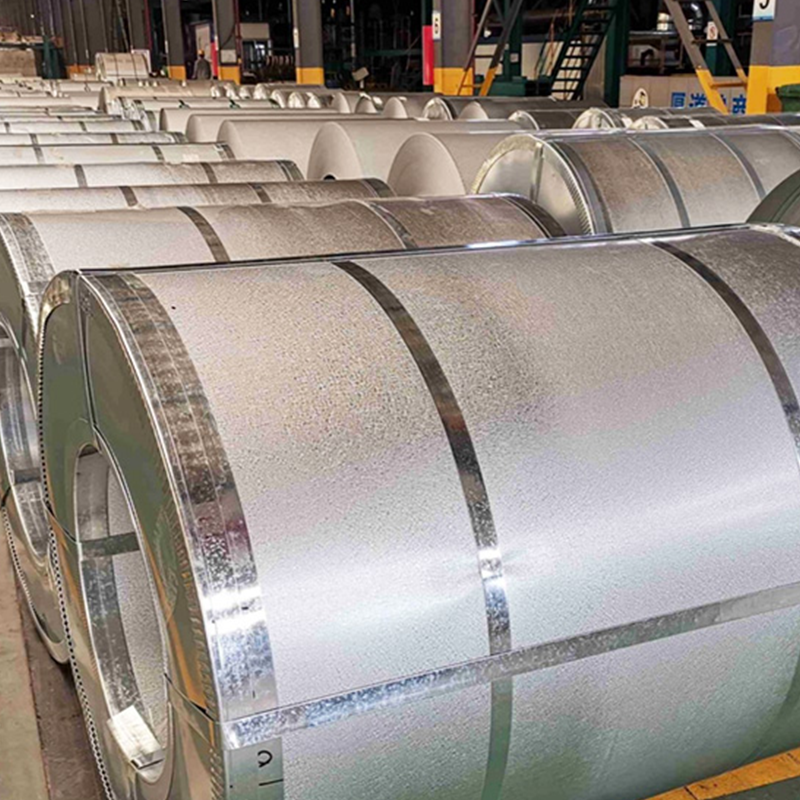
Proper storage is essential to maintain the quality of color coated steel coils after production. Improper storage can cause coating damage, rusting, and peeling.
- Environment Store in dry, well-ventilated areas with humidity below 70% and temperature between 5°C and 40°C. Avoid extreme temperature fluctuations that can cause condensation.
- Positioning Coils must be stored vertically (standing) on dedicated wooden or plastic saddles. The bottom of the coil should be at least 10cm above the ground.
- Stacking Limit stacking to a maximum of 3 layers. Use dry, clean wooden pads between layers to distribute pressure evenly. Maintain a gap of at least 10cm between adjacent coils.
- Handling Use dedicated coil forklifts or C-hooks. Do not use wire ropes for lifting, as this can deform the coil and damage the coating.
- Original Packaging Keep original packaging intact during storage. If packaging is opened for inspection, restore it promptly.
Conclusion
Quality control for color coated steel coils is a comprehensive process spanning substrate selection, coating application, surface inspection, and proper storage. Key quality parameters include coating thickness (≥20μm), adhesion (2H pencil hardness), formability (≤3T bend), and corrosion resistance (≥500h salt fog).
Accurate measurement using magnetic thickness gauges, micrometer methods, or metallurgical microscopy ensures consistent quality. In-process inspection systems detect defects early, while proper storage and handling prevent damage after production. When all quality control elements are properly implemented, color coated steel coils deliver reliable performance with service lives ranging from 7-25 years depending on the coating system selected.
Frequently Asked Questions
The minimum front coating thickness for exterior applications is 20μm, consisting of primer (≥5μm) and topcoat (≥15μm). Insufficient thickness compromises corrosion protection and service life.
Coating thickness can be measured using non-destructive methods (magnetic thickness gauge, magnetic-eddy current gauge) or destructive methods (micrometer, metallurgical microscopy). For galvanized coils, the zinc layer and organic coating must be measured separately.
The recommended storage temperature range is 5°C to 40°C with relative humidity below 70%. Avoid extreme temperature fluctuations that can cause condensation and damage the coating.
Color coated steel coils must be stored vertically (standing) because horizontal storage can cause deformation, coil collapse, and coating damage. Vertical storage also reduces the risk of stacking pressure damaging the coating.
Stacking should be limited to a maximum of 3 layers. Each layer should use dry, clean wooden pads to distribute pressure evenly and prevent coating damage. Adjacent coils should be separated by at least 10cm.
The primary standard in China is GB/T 13448-2019 "Test Methods for Color-Coated Steel Sheets and Strips." International standards include ISO 2178 and ASTM standards for thickness measurement and performance testing.
Coating is a significant production cost. Every micron of coating thickness represents approximately $1 million in material cost for large-scale manufacturers. Precise thickness control can save significant costs while maintaining quality.
For exterior applications, salt fog resistance of at least 500 hours is required. This test validates the coating's ability to protect the steel substrate in corrosive environments such as coastal or industrial zones.